Pakistan has consistently advocated for negotiations, diplomacy, an immediate ceasefire, and a peaceful resolution. Its stance on this and other conflicts is based on the principles of the UN Charter.
New York (News Desk): Pakistan has welcomed the recently concluded limited ceasefire agreement in the Ukraine conflict, which prohibits attacks on critical energy infrastructure and ensures safe navigation in the Black Sea.
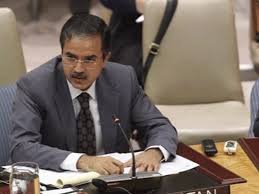
While delivering Pakistan’s policy statement on the humanitarian situation in Ukraine at a United Nations Security Council meeting, Pakistan’s Permanent Representative to the UN, Ambassador Asim Iftikhar Ahmad, commended the active engagement of the U.S. administration and its leadership in facilitating this agreement.
In his address, Ambassador Ahmad expressed optimism that this positive development and the momentum generated by these initial steps would eventually pave the way for a comprehensive and lasting ceasefire. He emphasized the importance of all parties fulfilling their commitments with sincerity and acknowledged the role of Saudi Arabia and its leadership in promoting peace efforts.
Reiterating Pakistan’s consistent position on the Ukraine conflict, he stressed that from the outset, Pakistan has supported negotiations, diplomacy, an immediate ceasefire, and a peaceful resolution. He underscored that addressing the core security concerns at the heart of this conflict requires a comprehensive strategy that ensures long-term and sustainable peace across the broader region.
Highlighting Pakistan’s friendly relations with both Russia and Ukraine, Ambassador Ahmad expressed deep concern over the devastating impact of the conflict on civilians, now entering its fourth year. He stated, “Every human life is precious.”
He reaffirmed that the protection of civilians and civilian infrastructure is a fundamental obligation under international law and international humanitarian law. He urged all parties to fully and consistently uphold these principles. Furthermore, he emphasized the need for uninterrupted access and protection for humanitarian aid workers to ensure that relief efforts are effective and aligned with the needs of affected populations.
Ambassador Ahmad also reiterated that the treatment of prisoners of war must adhere strictly to the provisions of the Third Geneva Convention, which is binding on all parties.
He concluded by reaffirming that Pakistan’s stance on this and other global conflicts is grounded in the principles of the UN Charter, including respect for state sovereignty and territorial integrity, the right of nations to self-determination, and the prohibition of acquiring land through force or the threat of force. He stressed that states must uphold international treaties, fulfill their obligations, and address all legitimate security concerns in accordance with international law.